Enzyme Supplier for Rice Syrup Production
Rice syrup plants lose money in the same places: a slurry that stays thick after cooking, a saccharification that runs long, filters that block early, and DE or Brix that drifts from batch to batch. Most of that is decided by how the enzyme program fits the rice you actually receive, not by the enzyme name on the drum.
Enzymesvalue supplies the enzyme stack for rice syrup production: alpha-amylase for liquefaction, glucoamylase for saccharification and pullulanase for debranching. Amylase is used on starch outside food as well, and a German-language page covers desizing with fungal alpha-amylase in textiles. We work with syrup manufacturers, ingredient distributors and resellers who buy in bulk, and every order is quoted to the plant's process and volume.
Wholesale and bulk supply for manufacturers and resellers. Send the product or process step, the quantity you expect to buy and the destination country, and we will come back with a quote. Request a quote
Who we supply
- Rice syrup and rice sweetener factories running broken rice, rice flour or rice starch
- Starch-sugar plants adding a rice line next to corn or cassava
- Food ingredient distributors and resellers who need a steady bulk enzyme source for their syrup customers
- Brewing-adjunct, confectionery, sauce and beverage manufacturers that make their own rice syrup base
Why broken rice needs its own enzyme plan
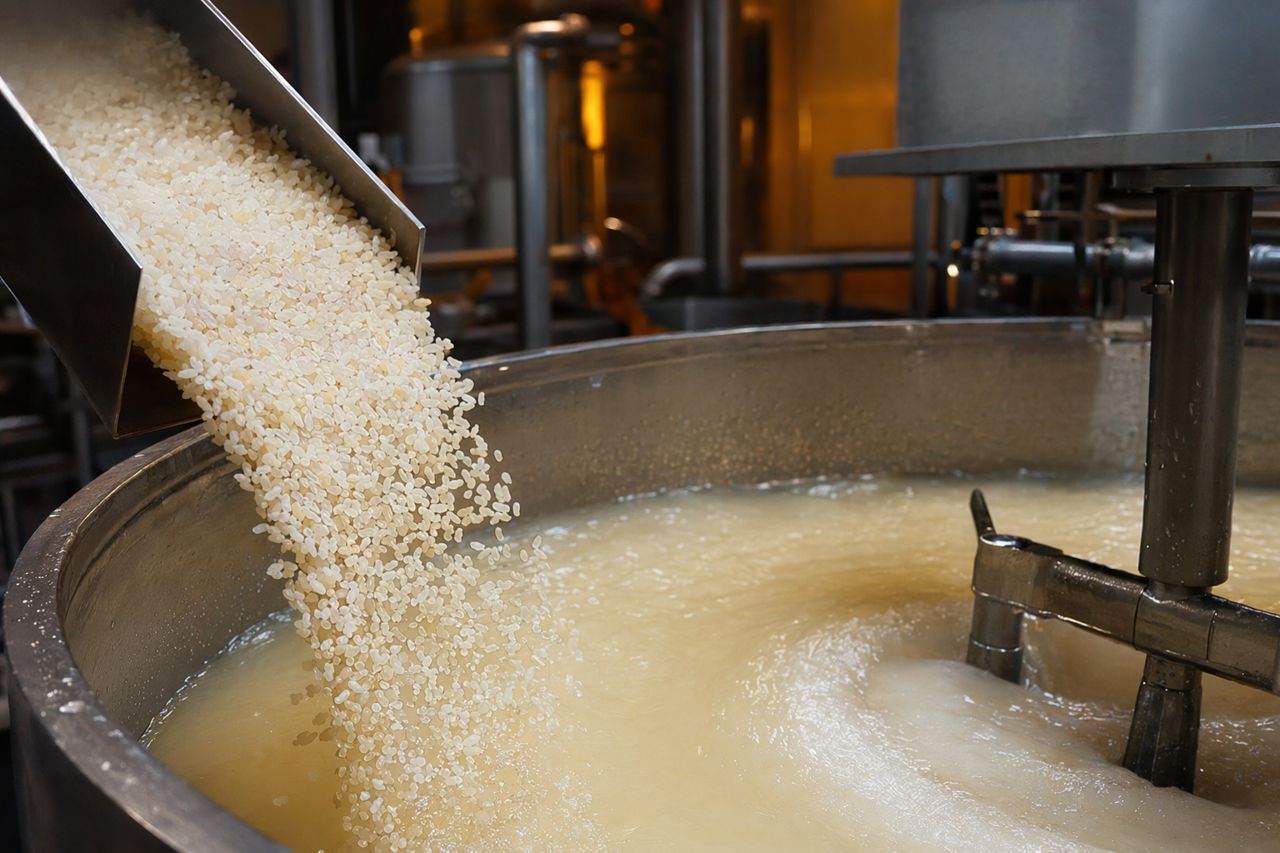
Broken rice is a practical, lower-cost feedstock, but it does not behave like refined starch. Particle size, starch damage, protein load, fines, soaking history and seasonal changes in the rice all move slurry viscosity, liquefaction speed, saccharification time and filtration rate. One batch can liquefy cleanly and the next can hold viscosity far longer, which costs steam, agitator load and schedule time. A good enzyme plan is built around that variability: the plant knows which step to adjust when a new rice lot arrives, instead of correcting the syrup at the end.
How starch-sugar plants run the two main enzyme steps
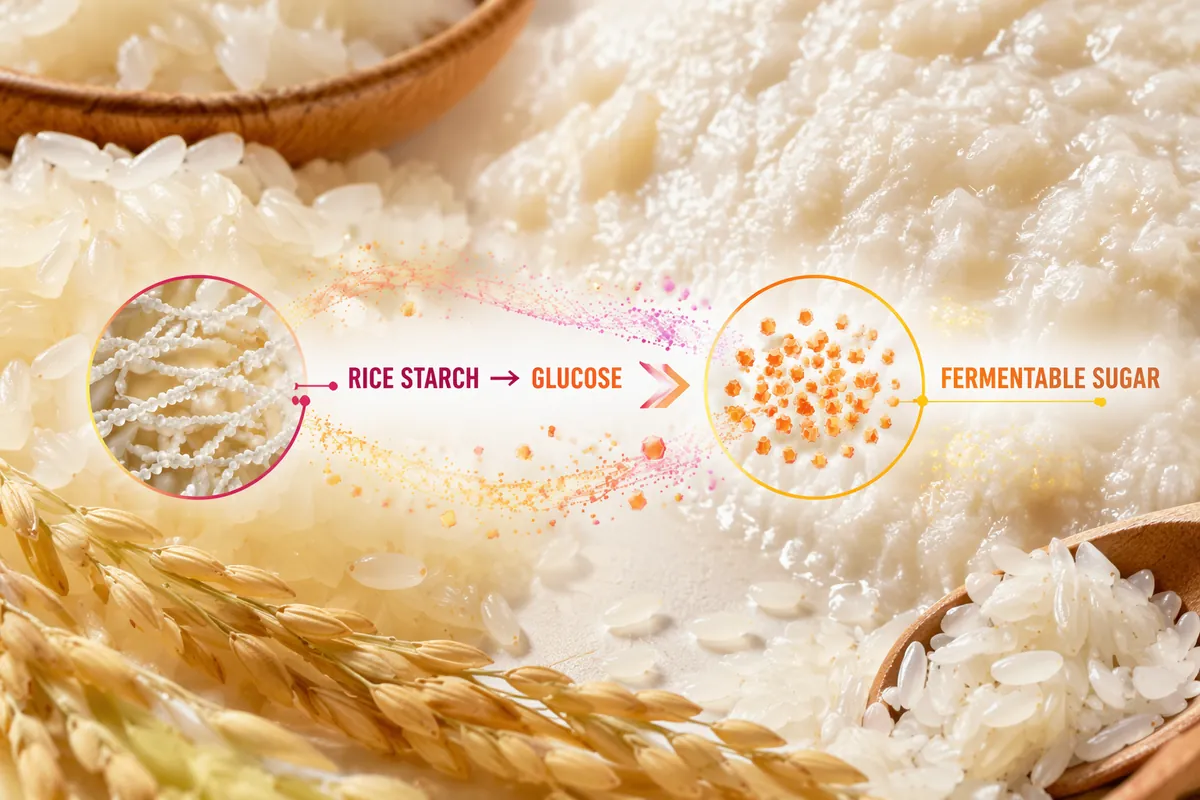
The front end of a starch-sugar line is a thermostable alpha-amylase made for the liquefaction of starch raw materials. It is built to survive jet cooking: it keeps working in a jet liquefaction system at 110 °C. A typical liquefaction setup is a starch slurry at 25-35% dry solids and pH 5.4-5.8, jet-cooked at 105-110 °C and held for 5-10 min. The enzyme dose is set per tonne of dry starch, so the right figure for your plant depends on the solids you run and is confirmed in a trial. It works by rapidly cutting the main-chain bonds of the starch, which is what turns a heavy cooked slurry into a pumpable dextrin stream.
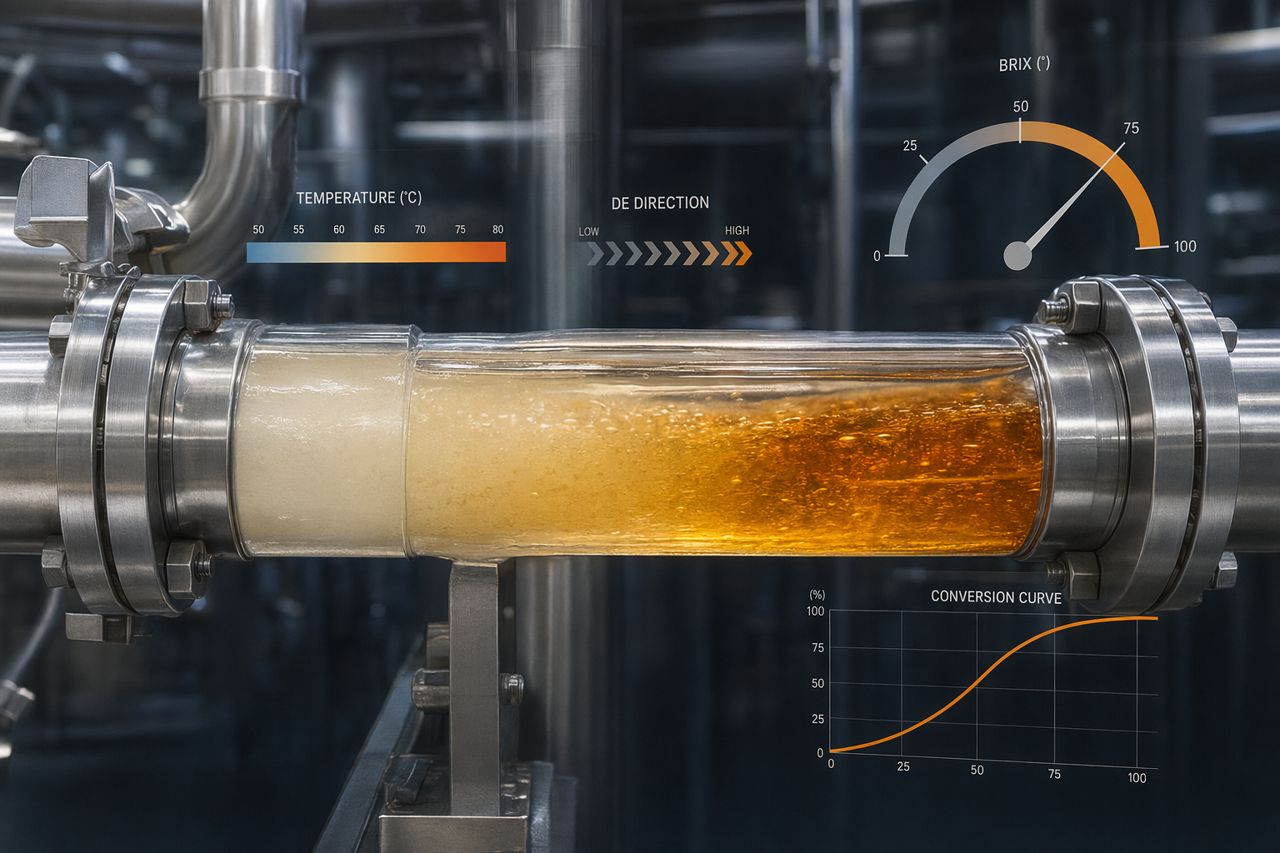
The second step is glucoamylase, which converts those dextrins into sugar. The same glucoamylase is used across starch sugar, brewing, seasonings, traditional malt syrup and dextrin production, so a rice syrup plant buys from the same product family as much larger starch-sugar users. Its working range is 30-65 °C and pH 3.5-6.0, which means the liquefied stream has to be cooled and its pH brought down before the glucoamylase goes in.
| Step | Enzyme | Working window | What goes wrong if it is off |
|---|---|---|---|
| Liquefaction | Thermostable alpha-amylase | 105-110 °C jet cooking, pH 5.4-5.8, slurry at 25-35% dry solids | Slurry stays thick, pumps and heat exchangers struggle |
| Saccharification | Glucoamylase | 30-65 °C, pH 3.5-6.0 | Hot or high-pH stream slows conversion and DE stalls |
| Debranching | Pullulanase, added with the glucoamylase | Matched to the saccharification step | Residual branched dextrins load the filters |
The common mistakes follow from these windows.
- Dosing glucoamylase before the liquefied stream has cooled and been acidified, so part of the enzyme is wasted.
- Running the slurry above the solids range the liquefaction step is set for, then blaming the enzyme for high viscosity.
- Shortening the jet-cooking hold to gain throughput, which leaves more unconverted starch for the filters.
What changes for the plant
- Viscosity: a heavy cooked slurry becomes a pumpable dextrin stream, with less load on pumps, mixers and heat exchangers.
- Saccharification time: a stream that enters at the right temperature and pH converts on schedule, so filtration and evaporation are not held up.
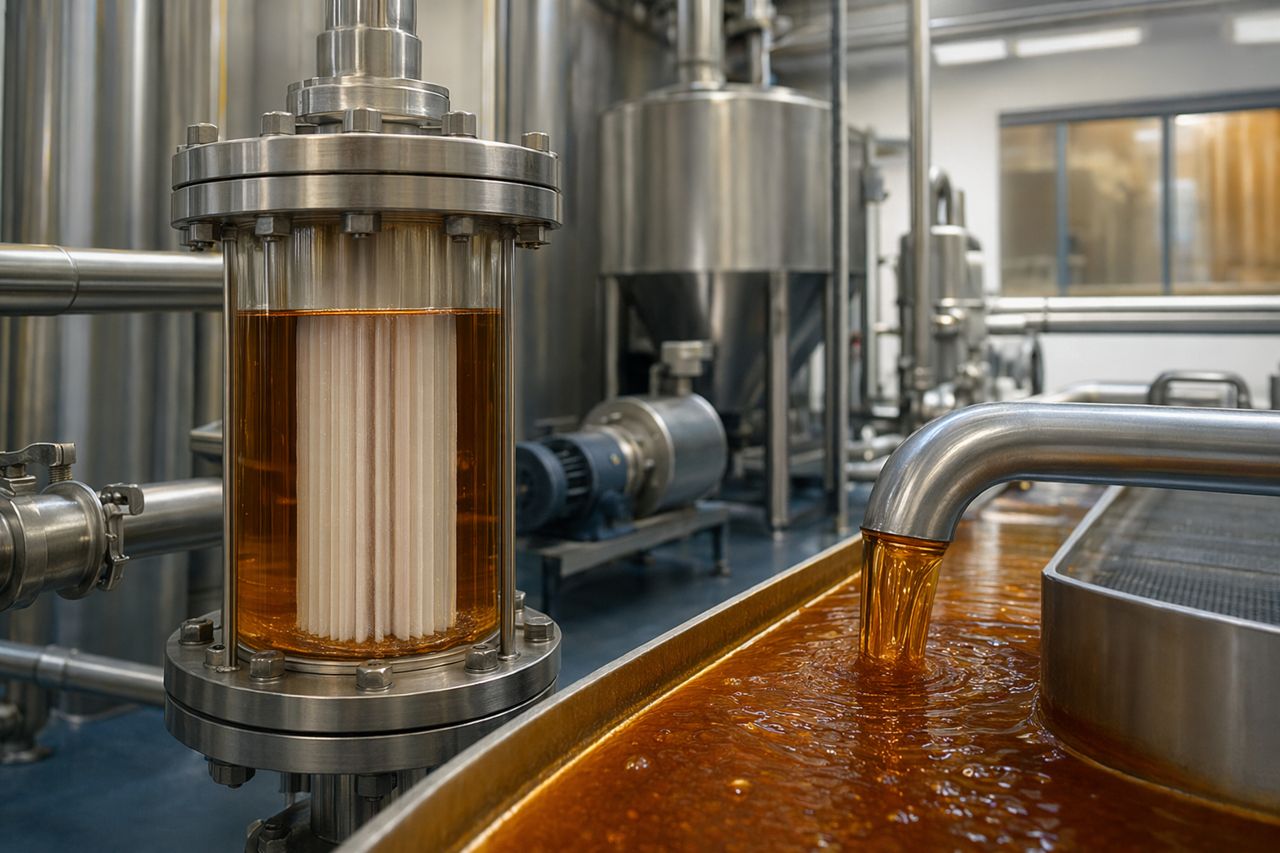
- Filtration: less unconverted starch and fewer branched dextrins mean longer filter runs and clearer syrup.
- Consistency: DE, Brix and syrup body stay closer to specification across rice lots, which is what your syrup buyers check first.
Where Enzymesvalue fits in your line
- Slurry preparation: controlled cooking and mixing of broken rice, rice flour or rice starch.
- Liquefaction: thermostable alpha-amylase to bring viscosity down.
- Saccharification: glucoamylase to build the sugar profile.
- Debranching: pullulanase where a higher DE or a cleaner profile is needed; see pullulanase for rice syrup DE targets.
- Filtration and finishing: smoother separation, concentration and standardisation.
What to send with your inquiry
- Product or step: liquefaction, saccharification, debranching or the full stack
- Raw material: broken rice type, rice flour or rice starch, and how much it varies
- Current process: slurry solids, cooking method, liquefaction and saccharification conditions
- The problem: viscosity, conversion time, filtration, yield or batch consistency
- Quantity: expected monthly or per-order volume
- Destination: delivery country and any packaging or document needs
Pack sizes, documents and delivery terms are confirmed per order.
Request a quote
Enzymesvalue supplies rice syrup manufacturers, distributors and resellers by quote. Tell us the enzyme or process step, the quantity and the destination country, and we will reply with a practical supply recommendation for your line.