Troubleshooting High Viscosity During Rice Starch Liquefaction
High viscosity during rice starch liquefaction is more than a processing inconvenience. In a rice syrup factory, it can slow agitation, strain pumps, reduce heat transfer, overload filtration, and create batch-to-batch variation that shows up later in saccharification, clarification, evaporation, and final syrup consistency.
For plant teams, the issue is rarely one single variable. Rice starch quality, slurry solids, temperature profile, pH drift, enzyme fit, dosing discipline, mixing efficiency, and residence time all interact. When viscosity rises unexpectedly, the goal is not guesswork. The goal is a controlled troubleshooting path that protects throughput, yield stability, and downstream process behavior.
Komeva supplies enzyme solutions for rice syrup production with a practical focus on liquefaction control, viscosity reduction, batch consistency, and technical support that speaks the language of the plant floor.
Why viscosity control matters in rice syrup production
Liquefaction sets the operating tone for the rest of the syrup line. If the rice starch slurry does not break down cleanly and predictably, the factory may see:
- Slow or uneven slurry movement through tanks and pipework
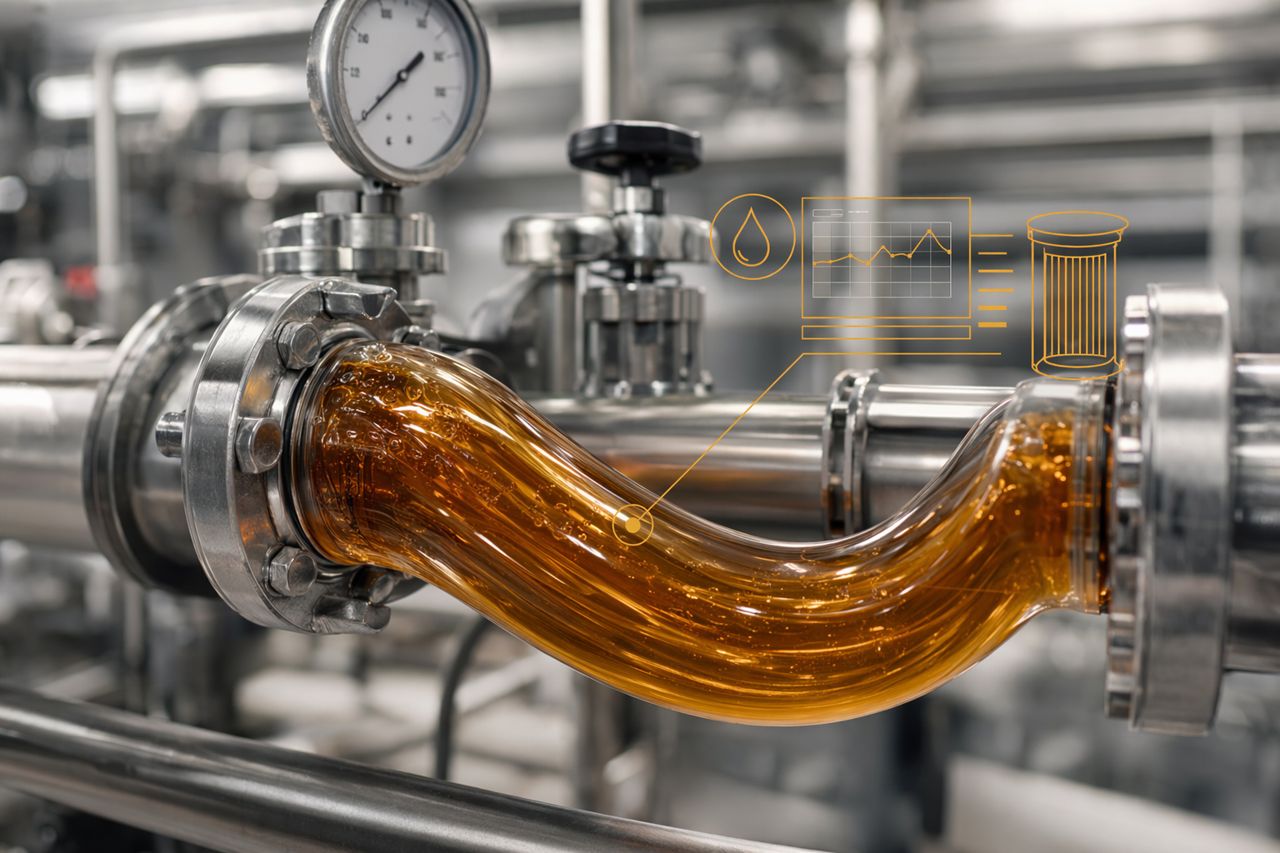
- Higher pump load and more difficult transfer between process stages
- Poor heat distribution and localized over-thickening
- Inconsistent conversion profile from batch to batch
- Longer holding times to reach target process behavior
- Increased filtration pressure or slower filter cycles
- More solids carryover into downstream clarification
- Higher risk of downtime for cleaning, flushing, and line correction
Good viscosity control supports smoother processing, more stable syrup quality, and better use of installed plant capacity.
Common causes of high viscosity during liquefaction
1. Slurry solids are higher than the liquefaction system can handle
Higher solids can improve factory economics, but only when the liquefaction system is matched to the load. If solids rise beyond the practical operating window, starch swelling and gelatinization can create a thick mass before enzymatic breakdown catches up.
Plant-floor signs include sluggish agitator movement, uneven tank circulation, rising transfer pressure, or thick material accumulating near dead zones.
Commercial impact: pushing solids too aggressively may reduce apparent water use, but it can cost more through lost time, energy demand, poor filtration behavior, and batch variability.
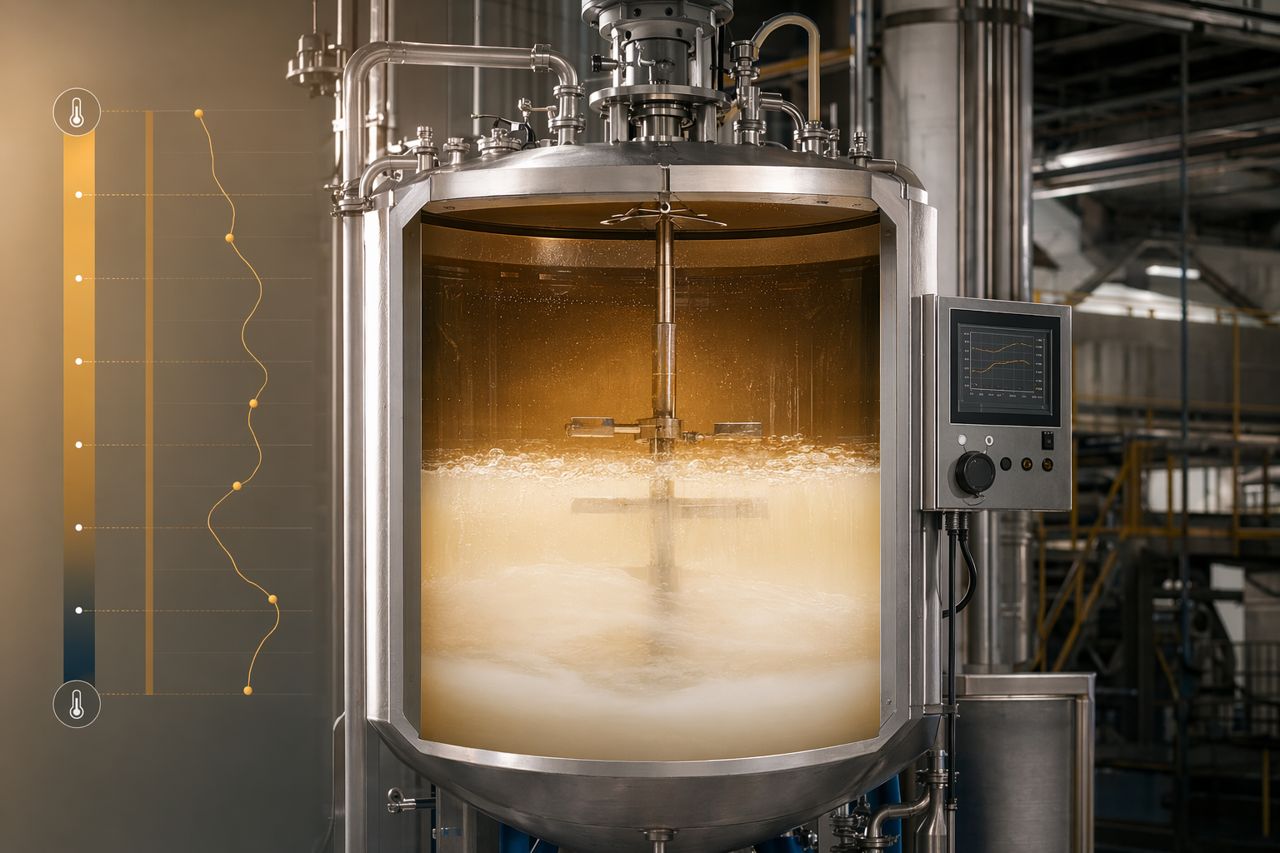
2. Temperature is not reaching the effective process window fast enough
Rice starch needs controlled heating and proper contact time during liquefaction. If heating is too slow, uneven, or poorly distributed, viscosity can peak before the enzyme system has enough opportunity to reduce the starch structure.
Check for:
- Cold spots in the tank or pipe section
- Delayed heat-up in large batches
- Inconsistent steam injection or heat exchanger performance
- Poor circulation around probes
- Temperature differences between recorded data and actual slurry zones
A displayed temperature is useful, but the slurry experience is what matters.
3. pH drift is reducing enzyme performance
Even when dosing is correct, pH movement can reduce liquefaction efficiency. Rice starch slurries may shift during preparation, heating, or after ingredient adjustment. If the pH is outside the preferred operating window for the selected enzyme system, viscosity reduction can become slower and less predictable.
Plant teams should track pH at meaningful process points rather than relying on a single pre-batch reading.
4. Enzyme selection does not match the rice substrate and process design
Not every liquefaction enzyme behaves the same in rice syrup production. The right fit depends on rice starch characteristics, solids level, process temperature, holding time, desired conversion profile, downstream saccharification strategy, and factory tolerance for viscosity peaks.
A mismatch may show up as:
- Acceptable performance in one rice lot but poor control in another
- Slow viscosity drop after gelatinization
- Excessive holding time before transfer
- Inconsistent downstream DE or Brix development
- Poor filtration behavior even when conversion appears acceptable
This is where an experienced enzyme supplier for rice syrup production can help narrow the operating window and recommend a more suitable enzyme approach.
5. Dosing is correct on paper but inconsistent in the plant
Many viscosity problems come from practical dosing variation rather than formulation failure. Enzyme may be added too early, too late, into a poorly mixed zone, or through equipment that does not deliver repeatably.
Review:
- Addition point location
- Metering pump accuracy
- Enzyme dilution practice, if used
- Tank mixing pattern during addition
- Operator-to-operator variation
- Batch record timing versus actual addition timing
The enzyme must contact the starch under the right conditions. Paper dosage alone does not guarantee plant performance.
6. Mixing energy is not enough for the slurry condition
Liquefaction requires contact. When the slurry becomes viscous, weak mixing creates zones where enzyme, heat, and starch do not interact evenly. This can leave partially treated material that later causes filtration instability or inconsistent saccharification.
Common indicators include uneven tank appearance, delayed viscosity response, transfer line surging, and sample variation from different points in the same batch.
7. Rice raw material variation is being underestimated
Rice source, milling profile, starch damage, residual protein, and particle size can all influence water uptake, gelatinization behavior, viscosity peak, and filtration response. A process that runs smoothly on one rice input may become unstable when the raw material changes.
Factories that track viscosity behavior by rice lot often identify patterns earlier and reduce troubleshooting time.
A practical troubleshooting sequence for plant teams
When viscosity rises, start with the variables that can be confirmed quickly and corrected without disrupting the whole production plan.
Step 1: Confirm the symptom
Define whether the issue is:
- High peak viscosity during heating
- Slow viscosity reduction after enzyme addition
- Poor transfer after liquefaction
- Filtration pressure increase after liquefaction
- Downstream inconsistency despite acceptable tank appearance
Each symptom points to a different corrective path.
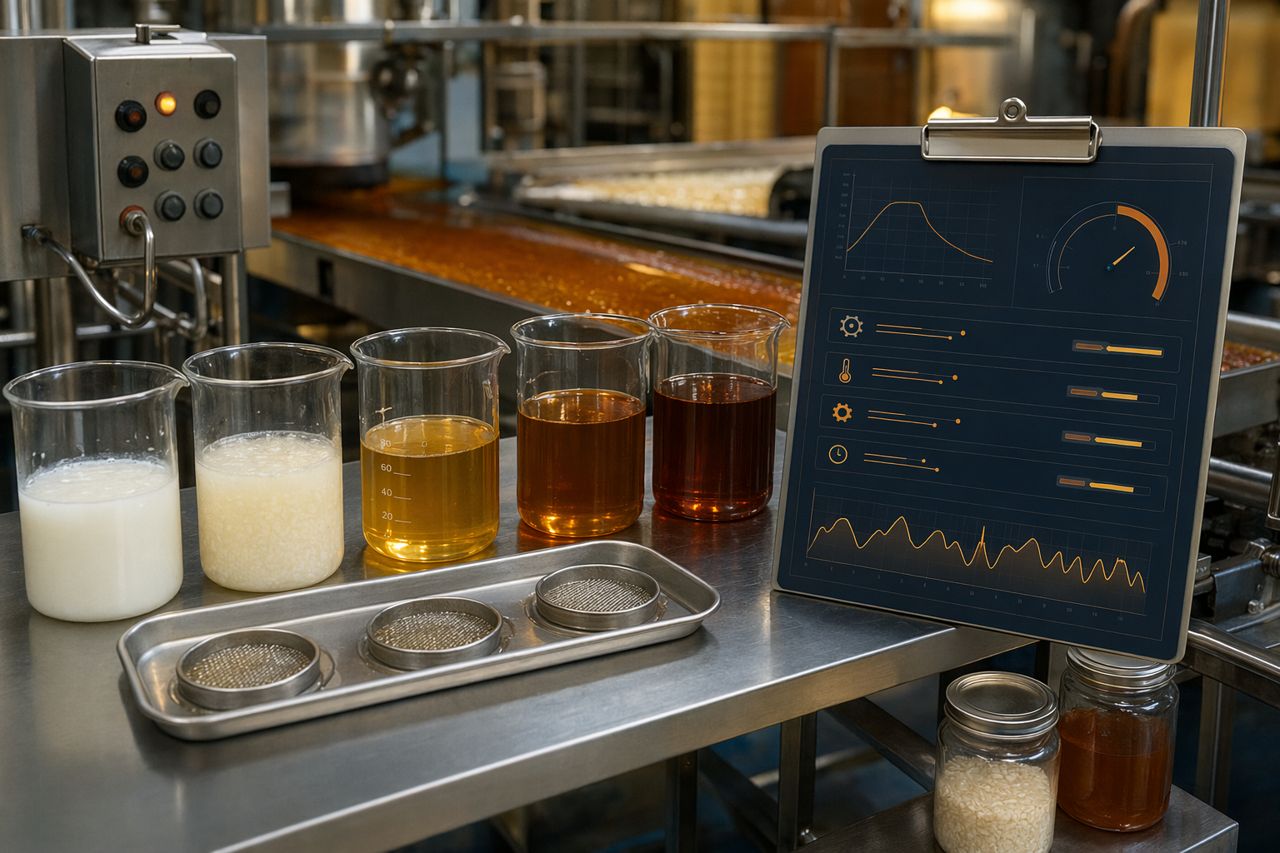
Step 2: Compare against the last stable batch
Pull the latest stable batch record and compare:
- Rice lot or starch source
- Slurry solids
- Water addition timing
- Heat-up profile
- pH readings
- Enzyme addition timing
- Agitator status
- Holding time
- Transfer behavior
- Filtration notes
Avoid comparing only final syrup data. Liquefaction behavior must be compared at the process stage where the problem begins.
Step 3: Check heat and mixing before changing enzyme dosage
A common mistake is to increase enzyme addition before confirming heat distribution and mixing. If the slurry is not reaching the intended process condition evenly, extra enzyme may not solve the real problem.
Look for mechanical or operational causes first: steam delivery, probe placement, agitation, recirculation, blocked lines, or scale buildup affecting heat transfer.
Step 4: Verify pH at the point of enzyme action
Measure pH where and when the enzyme is expected to perform. A preparation pH may not represent the actual liquefaction condition after heating and mixing.
If pH correction is needed, make changes gradually and document the impact on viscosity, holding time, and downstream filtration.
Step 5: Review enzyme handling and addition practice
Confirm that the enzyme is stored, handled, and dosed according to the agreed plant procedure. Check whether the enzyme addition point gives fast distribution into the slurry. Review whether operators have adjusted timing informally to manage production pressure.
Small deviations can create large differences in liquefaction behavior.
Step 6: Adjust the process window with supplier support
If the mechanical and operating checks are sound, the enzyme program may need adjustment. Komeva can support evaluation of enzyme fit for the rice substrate, solids target, temperature profile, viscosity control target, and downstream syrup requirements.
The aim is not simply to add more enzyme. The aim is to stabilize the liquefaction window so the factory can run predictably.
What good liquefaction should deliver
A well-controlled rice starch liquefaction stage should support:
- Predictable viscosity reduction during the planned hold
- Smooth transfer to the next process stage
- More consistent saccharification performance
- Improved filtration behavior
- Lower risk of blocked lines or emergency dilution
- Better batch-to-batch syrup consistency
- Reduced operator intervention
- More reliable production scheduling
In commercial terms, viscosity control protects throughput and reduces hidden factory costs.
How Komeva supports rice syrup factories
Komeva works with rice syrup producers that need reliable enzyme supply and practical technical support. Our role is to help factories connect enzyme choice with real operating conditions: rice starch behavior, solids level, temperature profile, pH control, mixing, residence time, filtration performance, and target syrup quality.
For a rice syrup factory, the right enzyme supplier should help reduce uncertainty. Komeva supports plant teams with clear recommendations, process-fit enzyme options, troubleshooting guidance, and supply continuity for production planning.
When to request technical input
Contact Komeva if your plant is seeing:
- Repeated viscosity spikes during liquefaction
- Longer liquefaction time than planned
- Inconsistent transfer or pumping behavior
- Higher filtration pressure after liquefaction
- Syrup batch variation linked to upstream starch conversion
- Raw material changes affecting process stability
- A need to improve yield stability without creating downstream problems
Request a quote
If you are evaluating an enzyme supplier for rice syrup production, Komeva can help review your liquefaction challenge and recommend a commercially practical enzyme approach.